

Red Robin Films’ latest short, Nightmare, plunges viewers into a relentless descent into terror, following an insomniac who, desperate to rid himself of a demonic presence, calls in a spiritualist — only to discover the so-called expert is a complete hoax. This chilling 15-minute horror, starring Jack Hyland and Vicki Sargent, was brought to life through a fusion of intense on-location shooting and cutting-edge virtual production, creating a hauntingly immersive experience that lingers long after the credits roll.
With only three days of shooting and a tight 2.5-month post-production window, the team’s ability to harness technology became the film’s secret weapon, turning logistical limitations into creative freedom.
A Split Production: Real-World Grit and Virtual Nightmares
The production was split across two distinct environments. The first two days were spent on location in the eerie, secluded landscapes of Theydon Bois, where the crew captured the oppressive, creeping dread of the protagonist’s waking life. Using a Sony FX9 paired with Samyang Xeen CF lenses, the filmmakers leaned into a raw, visceral aesthetic, allowing the cold, damp forest and dimly lit interiors to intensify the sense of isolation.
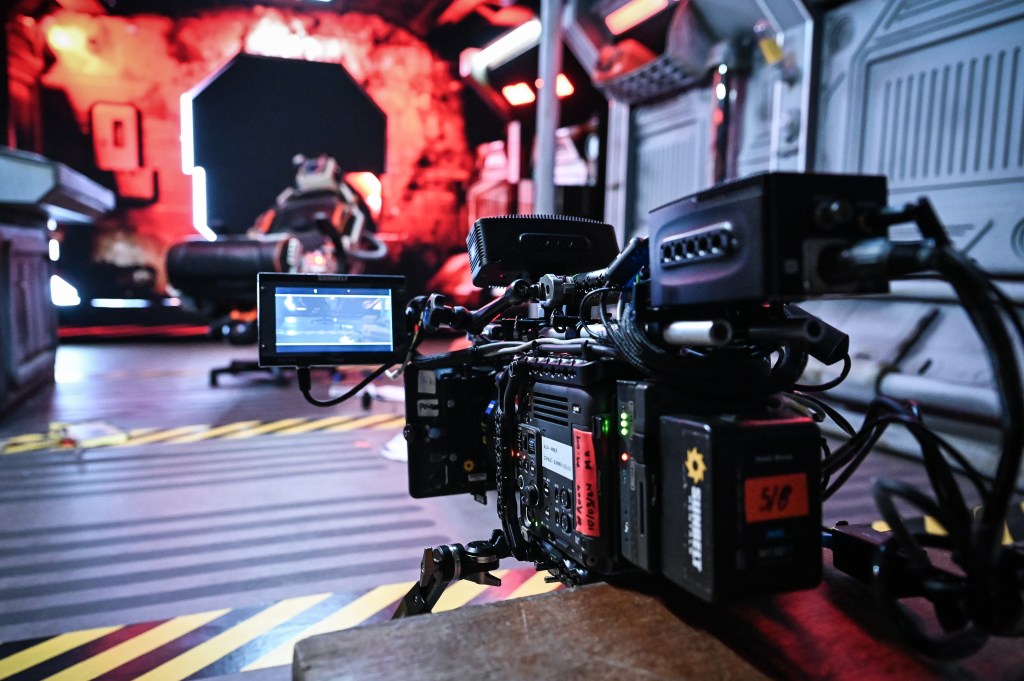
But it was on the third day, at Morden Wolf‘s virtual production studio, that Nightmare truly crossed into darkness. The VP day focused on the film’s most harrowing sequences, where the boundaries of reality blur and the insomniac’s fragile mind unravels. For this, the team switched to a Sony Venice with Fuji Premista lenses, taking advantage of the Venice’s exceptional dynamic range to capture every shadow and flicker of light within the haunting virtual environment.
The set was powered by the Mo-Sys StarTracker Max, an optical tracking system that allowed the virtual backgrounds to move in perfect sync with the camera. This gave the actors a tangible, responsive environment to interact with, intensifying the physicality of their performances and amplifying the film’s sense of creeping dread.

Post-Production: Shaping the Nightmare
Post-production spanned 2.5 months, where the film’s hybrid shooting style came together through a seamless workflow powered by Red Robin Films’ in-house technology, developed alongside VPSync Ltd. Their proprietary tool, VPSync Magic, proved invaluable — auto-syncing and compound-clipping multiple video tracks, drastically reducing the time typically required for managing green screen VP footage.
This system allowed the team to quickly organize their footage and focus on refining the visual storytelling. The virtual environments, built in Unreal Engine, were polished and enhanced to heighten the film’s relentless sense of dread — with subtle, almost imperceptible environmental changes that mirror the protagonist’s deteriorating grip on reality.
The final renders were meticulously composited inside Davinci Fusion, where the team pushed the horror elements even further: distorting space, manipulating lighting, and layering in unsettling visual cues to make viewers question what was real and what was purely nightmarish hallucination.
A New Era of Indie Horror
By combining location shooting with a single VP day, Nightmare achieved a level of visual ambition far beyond what would typically be possible on an indie horror timeline. The virtual production setup allowed the filmmakers to conjure environments that would have been prohibitively expensive to build practically — from infinite shadowy voids to impossible, shifting architectures that trap the protagonist in a waking hell.
Jack Hyland delivers a raw, emotionally devastating performance as the insomniac, his descent into madness rendered all the more visceral by the virtual set’s dynamic responsiveness. Vicki Sargent’s portrayal of the fraudulent spiritualist adds a sharp contrast, her presence a cruel reminder of the character’s isolation, as she fumbles through rituals that offer no salvation.

Horror, Unleashed
Nightmare is more than just a chilling short film — it’s a glimpse into the future of horror filmmaking. Red Robin Films’ willingness to embrace new technology, paired with their relentless commitment to crafting an uncompromisingly terrifying narrative, resulted in a film that pushes boundaries both narratively and technically.
In harnessing the power of virtual production, the team didn’t just tell a horror story — they created a living, breathing nightmare. And once you step inside, there’s no waking up.
 Red Robin Films
Leave a comment